


The Fashion Industry's Impact On Our Environment

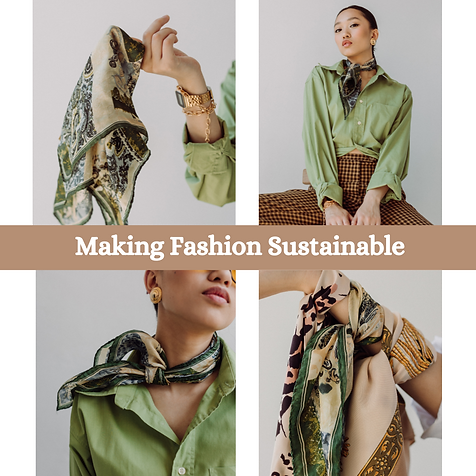
The fashion industry, which is a crucial economic area and industry on a global scale, is increasingly coming under more scrutiny due to significant environmental consequences. This piece conducts an analysis of the various environmental effects of textiles, examining aspects such as resource depletion, pollution, energy, consumption, and waste generation. Within the paradigm of mitigating these negative externalities, strategically focusing on procurement, partnerships, and products is essential. Through compliance with sustainable standards in product development and collaborations, the enforcement of emission reduction, industry targets, and the emphasis on circulatory and sustainable materials become essential steps in advancing the textile sector towards a sustainable and ecologically conscious path (Shabbir, 2019).
Resource depletion in the textile industry is conspicuously pronounced in conventional cotton cultivation, characterized by intensive pesticide use that induces soil degradation. Simultaneously, A single T-shirt made of cotton consumes about 2,700 litres of water (Malone, 2013). Extensive water utilization for cotton cultivation strains water availability in certain regions and localities, leading to far-reaching impacts on the ecology. Furthermore, synthetic fibres, particularly nylon and polyester, depend on petrochemicals, exacerbating the loss of non-renewable resources and complicating environmental problems. The manufacturing of polyester alone utilizes about 70 million barrels of oil annually worldwide (Al-Tohamy et al., 2022). This emphasizes how critical it is for the sector to adopt circular methods and sustainable materials in an environmentally conscious method to reduce the demand for scarce resources.
The fashion sector's pollution and energy consumption clearly delineates its environmental impacts. Chemicals used in textile manufacture, particularly in dyeing, can release millions of litres of wastewater from a single dyeing facility, which makes them dangerous. The problem is aggravated by microfiber contamination, as synthetic garments made from nylon and polyester may excrete around 700,000 microfibers per laundry load, contaminating waterways and the food chain (Paddison, 2017). In addition, extensive energy manufacturing has a major role in greenhouse emissions; around 8% of global carbon emissions come from the textile industry (Imran et al., 2023). This is intensified through fast fashion, where trends change rapidly, use more energy, and stress the environment more. This suggests that a change to sustainable approaches and processes prioritizing circulatory, low-carbon materials, and science-based emissions reduction targets is necessary to mitigate pollution and energy consumption issues in textile manufacturing.
Waste generation in the fashion industry is exemplified by mass production and fast fashion. This translates into an annual global discard of approximately 92 million tonnes of textile waste in landfills (Ruiz, 2023), aggravating environmental degradation because non-biodegradable materials degrade slowly. The widespread usage of blended materials such as a mix of polyester and cotton, decreases recycling rates due to disparate technologies, leading to increased waste in landfills. This problem is exacerbated by the industry’s water-intensive nature, which uses 93 billion cubic meters of water annually, even with treatment before disposal, ineffective water recycling compounds environmental stress (Bailey et al., 2022). To reduce the significant ecological impact, addressing these concerns is essential for the long-term sustainability of this sector. This indicates a focus on sustainable materials, and circulatory, industry-focused targets.
In conclusion, the textile industry urgently needs to implement sustainable methods to address the problems of resource depletion, pollution, energy consumption, and waste. Hence, it encourages a circular economy and moral manufacturing.
Recommendations on How the Fashion Industry Can Become more Sustainable
Switch to Sustainable Materials:
Consider alternatives like Tencel for conventional fibers.
Tencel's lower environmental impact due to sustainable wood pulp sourcing.
Water Conservation:
Implement water-efficient farming techniques like drip irrigation and rainwater gathering.
Explore closed-loop water recycling systems in textile production facilities.
Successful examples of up to 50% reduction in water usage through these methods.
Circular Economy and Recycling:
Embrace circular economy principles.
Set high standards for recycled content.
Participate in initiatives like the "Make Fashion Circular" campaign by the Ellen MacArthur Foundation.
Prioritize innovative textile recycling methods, especially chemical processes.
Focus on chemical recycling to address blended materials, showcasing commitment to eco-friendly procedures.
Ethical and Localized Production:
Shift towards sustainability and circular economies.
Embrace ethical and localized production practices.
Encourage the exchange of best practices among key players, including manufacturers, consumers, legislators, and fashion brands.
Works Cited
Agenpo. (2023, September 23). Sustainable Irrigation Practices for Enhancing Agricultural Productivity in Africa. Www.linkedin.com. https://www.linkedin.com/pulse/sustainable-irrigation-practices-enhancing-agricultural-productivity/
Al-Tohamy, R., Ali, S. S., Li, F., Okasha, K. M., Mahmoud, Y. A.-G. ., Elsamahy, T., Jiao, H., Fu, Y., & Sun, J. (2022). A critical review on the treatment of dye-containing wastewater: Ecotoxicological and health concerns of textile dyes and possible remediation approaches for environmental safety. Ecotoxicology and Environmental Safety, 231, 113160. https://doi.org/10.1016/j.ecoenv.2021.113160
Bailey, K., Basu, A., & Sharma, S. (2022). The Environmental Impacts of Fast Fashion on Water Quality: a Systematic Review. Water, 14(7), 1073. MDPI. https://doi.org/10.3390/w14071073
Benton-Collins, K. (2019, June 5). Material Guide: How Ethical is Tencel? Good on You; Good On You. https://goodonyou.eco/how-ethical-is-tencel/
Buckley, S. (2021, August 3). Closed-Loop Tech Aims to Change Textile Industry’s Water Use from “Waste2Fresh.” Sustainable Brands. https://sustainablebrands.com/read/cleantech/closed-loop-tech-aims-to-change-textile-industry-s-water-use-from-waste2fresh
Cho, R. (2021, June 10). Why Fashion Needs to Be More Sustainable. State of the Planet; Columbia Climate School. https://news.climate.columbia.edu/2021/06/10/why-fashion-needs-to-be-more-sustainable/
Damayanti, D., Wulandari, L. A., Bagaskoro, A., Rianjanu, A., & Wu, H.-S. (2021). Possibility Routes for Textile Recycling Technology. Polymers, 13(21), 3834. https://doi.org/10.3390/polym13213834
Imran, S., Mujtaba, M. A., Zafar, M., Hussain, A., Mehmood, A., Farwa, U. E., Theodosios Korakianitis, Kalam, M. A., H. Fayaz, & C. Ahamed Saleel. (2023). Assessing the potential of GHG emissions for the textile sector: A baseline study. Heliyon, 9(11), e22404–e22404. https://doi.org/10.1016/j.heliyon.2023.e22404
Malone, J. (2013, February 6). It Takes 2,700 Liters of Water to Make a T-Shirt. Triplepundit.com. https://www.triplepundit.com/story/2013/it-takes-2700-liters-water-make-t-shirt/54321
Paddison, L. (2017, February 22). Single clothes wash may release 700,000 microplastic fibres, study finds. The Guardian; The Guardian. https://www.theguardian.com/science/2016/sep/27/washing-clothes-releases-water-polluting-fibres-study-finds
Ruiz, A. (2023, March 9). 17 Most Worrying Textile Waste Statistics & Facts [2023]. Theroundup.org. https://theroundup.org/textile-waste-statistics/#:~:text=Global%20Fashion%20Industry%20Waste
Shabbir, M. (2019). Textiles and clothing : environmental concerns and solutions (M. Shabbir, Ed.). Scrivener Publishing.
The Ellen MacArthur Foundation. (n.d.). Fashion and the circular economy. Www.ellenmacarthurfoundation.org. Retrieved February 11, 2024, from https://www.ellenmacarthurfoundation.org/fashion-and-the-circular-economy-deep-dive?_ga=2.156801339.1219036575.1660665039-170758297.1654013160&gad_source=1&gclid=Cj0KCQiAzoeuBhDqARIsAMdH14GbwxiCmy6A-XZ8ywfbYX1GmcWO7NOKTzlkUMzwntXb4qmSojPFXVEaAjMCEALw_wcB
Images
Canva


Comments