


UAE & it's Weather Machine
- SIG UofT
- Aug 6, 2021
- 2 min read

Marcella Sukotjo, 3rd August 2021
We can now control rain. While we’ve seen these divine actions in movies like The ultimate Christmas Present, and Cloudy with a Chance of Meatballs, it is actually a scientifically engineered, real feat of technology that is conducted by many countries. It is known as Cloud Seeding.
Recently, the UAE caused several heavy artificial rains in its regions in response to a heat wave that almost reached 50 degrees. With climate change and global warming looms a hotter future on the horizon, and the threat of decreasing water sources, this is certainly not the last time that the UAE will literally ‘make it rain’.
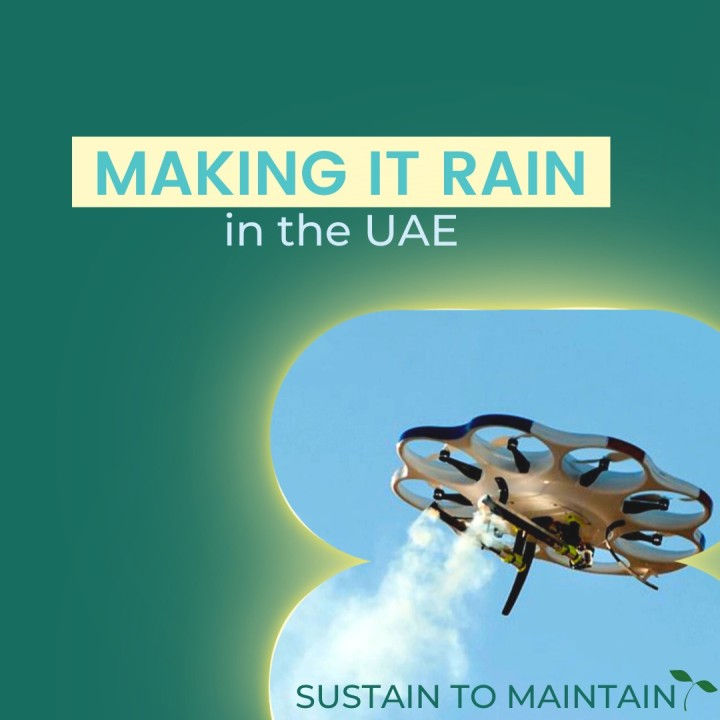
While cloud seeding can be done many different ways, in UAE, scientists created rainstorms with the help of drones. This particular method is a way of combating a problem that the region faces in which small rain droplets evaporate midair amongst the hot UAE weather. The drones emitted electric zaps onto the clouds that caused water droplets to clump together. Once the droplets are too heavy, they result in large raindrops that fall to the ground without being evaporated midair.
The UAE Research Program for Rain Enhancement Science has invested in a multitude of research projects over the last few years, one of them being University of Reading in England who has received $1.5 million for three years. This is certainly an important investment for the UAE who faces a growing population with an even faster growing demand for water. Water is a big issue for the UAE, and they have certainly invested into various strategies for water security from desalination technology to mountain-building projects.
While new and improving technology is certainly an exciting achievement for mankind, we must remember what necessitates its creation in the first place. Zapping clouds to produce rain is cool, but what is not cool is the fact that a whole region is facing severe climate conditions and the threat of water scarcity, due to human-induced global warming.


Comments