


4 Ways to Engage in More Sustainable Practices
- SIG UofT
- Feb 7, 2024
- 4 min read


1. Buy Groceries Locally

Local grocers tend to be closer than big grocery chains, allowing for shorter transportation distances and fewer carbon emissions. Furthermore, it opens up options for walking, biking and other sustainable solutions due to the nearer location. Local businesses also have closer ties to their communities, often leading them to adopt more eco-friendly practices for the sake of improving the local environment. This can include sourcing their products close by (which reduces emissions for transportation), or eco-friendly packaging. These groceries will often sell seasonal and locally sourced products, which saves tons of electricity on refrigeration, unlike bigger groceries that have the money to spend on sustaining these goods for longer than their seasons. Purchasing from local businesses further helps the environment, since they use significantly less packaging than bigger corporations. They often use less plastics during production, leading to less waste in our oceans or landfills. Local groceries typically operate on a smaller scale than large corporations, which often leads to lower energy usage. This can be a result of their buildings being much smaller, or the use of energy-efficient heating, lighting and cooling systems to save money on electrical bills.
2. Shop at Thrift Stores
There is no doubt that the manufacturing and distribution process of clothes leaves a significant carbon footprint. With trends changing constantly, fast fashion is bound to increase. Fast fashion drives the triple planetary crisis. People are buying more clothes than ever, and wearing them for shorter amounts of time. It is time to consume more sustainably, while still being able to have access to a plethora of variety, Thrift stores are not only a cost-effective but also a sustainable way to shop. Statista has forecasted that the market of secondhand and resale items will be valued at $351 billion by 2027. According to studies, increasing a garment's lifespan by only nine months can result in approximately 20–30% reduction in its carbon, water, and waste footprint. Furthermore, textiles are kept out of landfills, where they would otherwise contribute to pollution and greenhouse gas emissions, by thrifting.
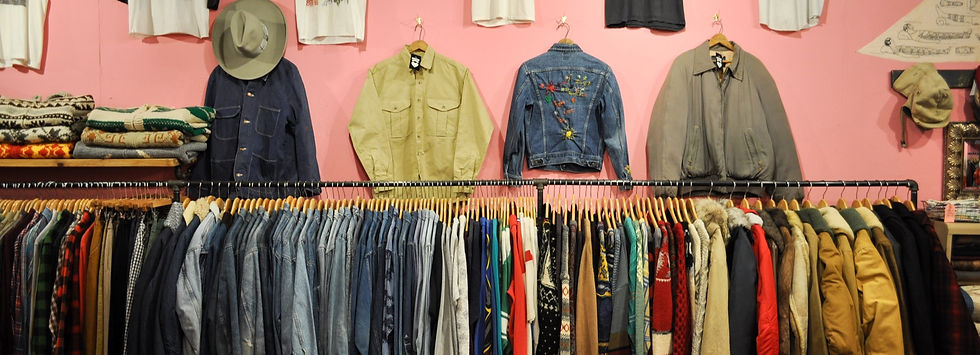
Here are some of Toronto’s favorite local thrift stores: Common Sort, Double Take and Mama Loves you vintage.
3. Use Public Transportation

It’s no secret that using petrol or diesel cars for everyday transport is horrible for the environment. Cars release on average one pound of CO2 per mile driven, according to UCLA, this in turn when looking at a global scale, contributes massively to the anthropogenic greenhouse effect. Not to mention that cars use harmful chemicals that can be horrible for the environment, like antifreeze and other fluids. One of the phenomenal ways one could look to reduce their carbon footprint is to get around with public transportation. It is estimated that taking public transportation, rather than driving alone, reduces carbon emissions by 45%. It is worth mentioning that this is a great way to be sustainable in the long run, but also helps the community in the short run. Reducing CO2 emissions leads to better air quality and therefore healthier communities since there can be fewer cases of respiratory issues such as asthma and even cancer.
Presto offers a 40% student discount off full ticket prices. You can visit your local Shoppers Drug Mart with proof of enrollment in a post-secondary institution, and ask the cashier to convert your existing Presto pass to a student pass. Otherwise, you must set the concession in person while purchasing a PRESTO card or apply online for a GO Student ID.
4. Smart Thermostats
Smart thermostats have been a great addition for those who are looking to conserve energy and save on utility bills. Not only are these devices energy efficient with built-in algorithms that can detect and learn different heating and cooling patterns, but they can also adjust temperature accordingly to optimize energy usage. These devices can essentially learn and then integrate procedures based on the behaviour of the occupants of a home, which is how it stands out from a traditional thermostat.

With remote control and monitoring that allows consumers to operate these devices from their mobile phones, the mistake of forgetting to adjust the temperature when leaving the house is eliminated. Consumers can ensure that their HVAC systems aren’t operating unnecessarily while helping conserve energy. Smart thermostats also offer features to customers such as providing feedback on how to conserve energy and information on the consumer's energy usage at specific times, which allows the consumers themselves to take voluntary action to continue promoting energy efficiency.
Overall, it is evident that smart thermostats can provide consumers with the information they need to make an informed decision about their energy usage, which helps reduce their environmental impact while also promoting sustainability.
Bibliography:
“40 Ways to Be More Eco Friendly in 2024: Greenmatch.” GreenMatch.Co.Uk, 27 Nov. 2023, www.greenmatch.co.uk/blog/how-to-be-more-eco-friendly.
“5 Environmental Benefits of Sustainable Transportation.” Transportation, 20 Oct. 2023, transportation.ucla.edu/blog/5-environmental-benefits-sustainable-transportation#:~:text=Less%20Pollution%20and%20Clearer%20Skies&text=It’s%20estimated%20that%20public%20transportation,6%20to%2014%20million%20tons%20.
Image Resources:
ArtMarie. “Teenager Holding Ecologically Friendly Reusable Bag with Fruit And...” Getty Images, www.gettyimages.com/detail/photo/young-girl-choosing-vegetables-and-fruit-at-a-royalty-free-image/1159469178. Accessed 7 Feb. 2024.
Cargo, cargo.site/. Accessed 7 Feb. 2024.
Greentumble. Greentumble, 31 Aug. 2019, greentumble.com/.
“LIVE1 Digital Channel.” Now, 23 Jan. 2017, www.cp24.com/now?clipId=68596.
Wp-Media. “Preload Pages before the User Click on It · Issue #2898 · WP-Media/WP-Rocket.” GitHub, github.com/wp-media/wp-rocket/issues/2898. Accessed 7 Feb. 2024.


Comments